

The 2026 Wolters Kluwer Future Ready Lawyer Report
Building confidence in an AI era
The 2026 Future Ready Lawyer Survey reveals a legal industry in the midst of rapid transformation. As Al adoption gains momentum and demands grow more complex, law firms and corporate legal departments are reassessing how they work, innovate, and deliver value.
This year's findings highlight emerging opportunities, urgent challenges, and how legal professionals can remain future-ready in a landscape that refuses to stand still.
Download the 2026 Future Ready Lawyer Report
Fill out the form to access insights from legal professionals from around the world about top industry trends, technology adoption, key challenges, and the ongoing transformation of the legal profession.
Download the Report and get automatically registered for our expert webinars.

AI adoption
Al has become a baseline tool for legal professionals

Revenue growth
Al is not only enhancing productivity but also driving financial growth within the legal sector.

Efficiency gains
Al integration delivers tangible efficiency improvements

Barriers to adoption
Ethical concerns, data privacy issues, insufficient training, and resistance to change remain the main challenges
By submitting this form, you are acknowledging that you have read and understood our Privacy Policy.
Navigating trust and harnessing innovation for better outcomes

❝ Corporate legal departments and law firms are weaving Al more intricately into their daily operations, all while contending with the ethical considerations, data privacy concerns, and the demand for evolving skillsets that follow closely behind. Legal professionals will require new ways of working that allow them to move at the same pace as their industry, with solutions that combine advanced technology with unparalleled insight. ❞
Martin O'Malley
CEO, Wolters Kluwer Legal & Regulatory
Key findings
AI Adoption
Al technologies have become deeply embedded in the legal sector, transforming how legal professionals approach their work
- Over 90% of respondents report using at least one Al tool in their daily workflow.
- Al has become a baseline tool for legal professionals, with usage spanning law firms, corporate legal departments, and business consulting practices.
- Al is most used for legal research and analysis, developing legal arguments, drafting contracts, and reviewing documents.
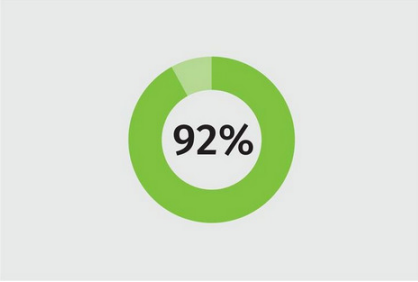
92% of legal professionals now use at least one AI tool
Efficiency gains
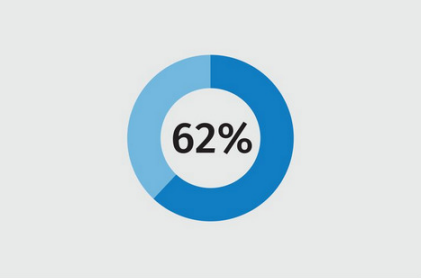
62% of respondents save 6-20% of their weekly time due to AI
Al integration delivers tangible efficiency improvements for legal professionals.
- More than 60% of respondents report weekly time savings of 6% to 20% resulting from Al usage.
- By automating routine tasks such as legal research, document review, and contract drafting, lawyers can dedicate more time to strategic, high-value work.
- Successful adoption of Al requires ongoing investment in training, ethical frameworks, and seamless integration into daily workflows.
Revenue growth
Al is fundamentally reshaping the legal industry, driving a transformation in traditional business models
- Approximately 50% of respondents reported that revenue has increased by 6%-20%
- Legal organizations that embrace Al holistically are better positioned to deliver consistent, high-quality outcomes and build lasting client trust.
- 62% of legal departments believe that Al-driven efficiencies will significantly reduce the prevalence of the billable hour, paving the way for alternative pricing models and greater cost transparency.
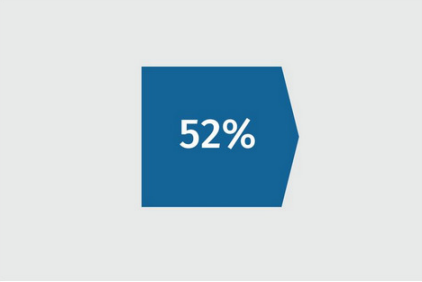
52% of respondents reported revenue increases after adopting AI
Barriers to adoption
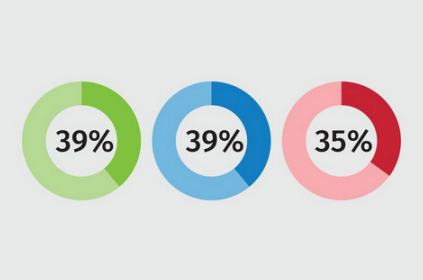
Top barriers to AI adoption in the legal profession
As Al becomes more embedded in legal workflows, strong information security and compliance programs are increasingly critical.
- The top challenges to further Al implementation are ethical concerns related to Al and data privacy (39%), inadequate training (39%), and resistance to change (35%).
- 35% of respondents cite cybersecurity as a significant concern, however few organizations feel very prepared to address those challenges.
- Effectively leveraging Al while managing risks will be key for future-ready legal teams.
Demand for specialized expertise
The complexities of global business and geopolitical risks continue to reshape regulatory compliance challenges, driving increased demand for specialized legal expertise.
- 44% of survey participants report increased demand for expertise in sanctions, export controls, international arbitration, and crossborder transactions.
- Cybersecurity concerns (35%) and regulatory scrutiny and compliance requirements (33%) continue to intensify.
- Effective use of Al will be critical for managing these expanding demands.
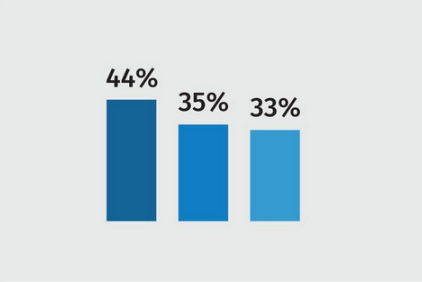
Growing demand for specialized legal expertise
Country facts
Countries where respondents view ethical concerns related to Al and data privacy as a top concern
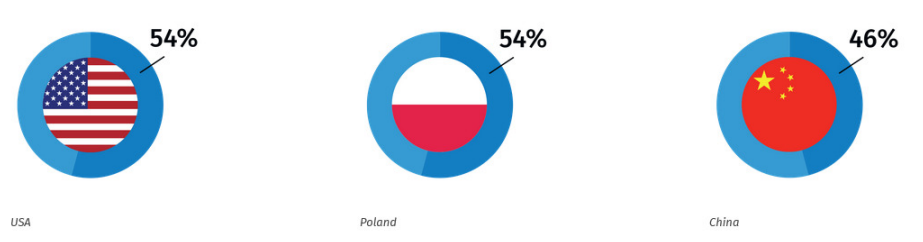
Countries where respondents view compliance with data privacy regulations as a top information security challenge

Download the 2026 Future Ready Lawyer Report
Discover the latest legal trends and challenges affecting the future of law, and gain a competitive edge with the 2026 Future Ready Lawyer Report - Building confidence in an AI area
Expert Community
Legal industry insights: A webinar series on AI, new business models, culture, and security
Future Ready Lawyer Webinar Series
This year, the release of the Report is accompanied by a series of expert webinars. Legal thought leaders - from around the world - will share insights on Al, new business models, culture, and security, revealing how these forces are transforming the industry's future direction and resilience.

Legal luminaries' insights

❝ Over the next five years, Al is likely to significantly transform the provision of legal services and the measurement of value. This should not necessarily be seen as 'irreparable damage' to the profession, but rather as a lever for creating exciting opportunities. Instead of replacing lawyers, Al tools that demonstrate a significant increase in productivity (think document review) allow lawyers to move from routine work to high-value strategic advice: the '80/20 reversal,' where lawyers spend 80% of their time analyzing rather than gathering information; provided that, with no exception, human supervision is always in place. ❞
Licia Garotti
Partner at PedersoliGattai Law Firm, heading the Technology Law and Intellectual
❝ I think with such a widespread general purpose technology like GenAl, fostering Al literacy has to start in a personal way. What I mean by that is someone won't grasp it professionally until they start to familiarize themselves with it in a low-stakes, casual environment with topics familiar to them - cooking, travel, home repair, whatever the case may be. ❞
Dyane O'Leary
Professor of legal writing and directs Suffolk Law's Legal Innovation & Technology (LIT) Center and LIT Concentration


❝ I attended a conference recently where there was a panel of GCs discussing the impact of Al on their outside counsel work. Some certainly want their bills lowered. However, others are happy to pay the same - or more - for faster results and better outcomes. Although it is not unusual for clients to pay "performance premiums" for certain work, that may become more common if Al can help clients obtain answers more quickly, giving them greater time to plan, pivot, etc. ❞
Joy Heath Rush
Chief Executive Officer of The International Legal Technology Association (ILTA)
❝ As Al takes over simpler legal tasks, reducing junior roles, firms must ensure traditional legal skills are not lost. Human oversight remains essential: Al outputs must be reviewed through sound legal reasoning and ethical judgment by a human in - or at least on - the loop. To maintain this balance, organizations should integrate Al literacy into early legal training while preserving pathways for developing core analytical and interpretive skills needed for legal work. Replacing alljunior lawyers with Al risks eroding the future pool of (senior-) experts needed for humanin/ on-the-loop oversight and could potentially undermine both professional standards and trust in Al-assisted legal work. ❞
Frauke Rostalski
German legal scholar, legal philosopher, and author


❝ The most valuable talent today are those who possess both legal experience and technological expertise, and we need targeted reforms in both recruitment and talent development. Organizations may establish legal-technology clubs or study groups internally, appointing the most passionate young professionals as leaders, and providing them with institutional support such as funding, training opportunities, and access to external technical experts for guidance. This will help identify and cultivate compound talents within the organization who combine legal knowledge with technological capability. ❞
WEI Xin
Founder and Managing Partner of RICC & Co.
❝ Law firms should realize that there is practically no lawyer left who does not use Al. If they do not get secure tools, they will have "shadow Al" and situations thatt are dangerous in terms of ethics and reputation. The only effective solution is a proactive approach: providing lawyers with secure, approved Al tools that meet their needs. Bans and restrictions do not work - lawyers will find a way to use Al anyway, but they will do so in an uncontrolled and potentially dangerous manner. ❞
Tomasz Zalewski
An attorney-at-law specializing in public procurement law, new technologies,and intellectual property law.


❝ Training works best when it focuses on prompt strategy, outcome review, and risk spotting within real tasks. Ethical guidance lands when it is embedded in examples that match the rhythm of daily work. People learn faster when the training feels immediate and connected to their own judgment. ❞
Greg Lambert
Chief Innovation Officer at Jackson Walker and co-host of The Geek in Review podcast
❝ I do not see ethical issues and data protection as obstacles, but as an absolutely necessary condition for success. By incorporating these aspects early in the design, trust increases. This includes being transparent about which parties (inside or outside the EU) use the data and atyn in what way. ❞
Marie José Bonthuis
Founder and owner of Privacy1

More insights from the Future Ready Lawyer Report

Legal AI adoption: legal departments achieve time savings and revenue growth

Legal industry 2026: A culture of continuous learning

Reshaping the legal industry - document automation & ALSPs in an era of AI

Information security - a new ever-present risk in the legal industry
Download the 2026 Future Ready Lawyer Report
Discover the latest legal trends and challenges affecting the future of law, and gain a competitive edge with the 2026 Future Ready Lawyer Report - Building confidence in an AI area
About the Survey and Wolters Kluwer Legal & Regulatory
The 2026 Future Ready Lawyer Survey from Wolters Kluwer's Legal & Regulatory division included quantitative interviews with 810 lawyers in law firms and corporate legal departments across the U.S., China, and eight European countries - Germany, the Netherlands, the United Kingdom, Belgium, France, Italy, Spain, Poland, and Hungary - to examine how client expectations, technology, and market trends are affecting the future of the legal profession and how legal organizations are prepared to address these.
The survey was conducted online for Wolters Kluwer by a leading international research organization from August 8 to August 25, 2025.
Wolters Kluwer Legal & Regulatory - a division of Wolters Kluwer - is a leading provider of legal and compliance solutions that enable professionals to improve productivity and performance, mitigate risk, and achieve better outcomes.
Wolters Kluwer (WKL) is a global leader in information, software, and services for professionals in healthcare, tax and accounting, financial and corporate compliance, legal and regulatory, and corporate performance and ESG. We help our customers make critical decisions every day by providing expert solutions that combine deep domain knowledge with specialized technology and services.
Wolters Kluwer reported 2024 annual revenues of €5.9 billion. The group serves customers in over 180 countries, maintains operations in over 40 countries, and employs approximately 21,600 people worldwide. The company is headquartered in Alphen aan den Rijn, the Netherlands.
Contact us
For media and customer inquiries:





When you have to be right
ⓒ 2026 Wolters Kluwer N.V. and/or its subsidiaries. All rights reserved.